 Hi,your comments are sharp.The question about carbon sequestration and carbon
 trading is how the poor nations can economically benefit out of it. If
carbon trading took place,wouldn't it carry costs and how to deal with it.
Suppose the concerns about global warming as human derived situation is a
farce,who benefits out of it. Could global warming is a tool deployed
globally by the capitalist elites to further strenghten their grips on the weak
and the poor. A new world order they said,well ordered by whom?
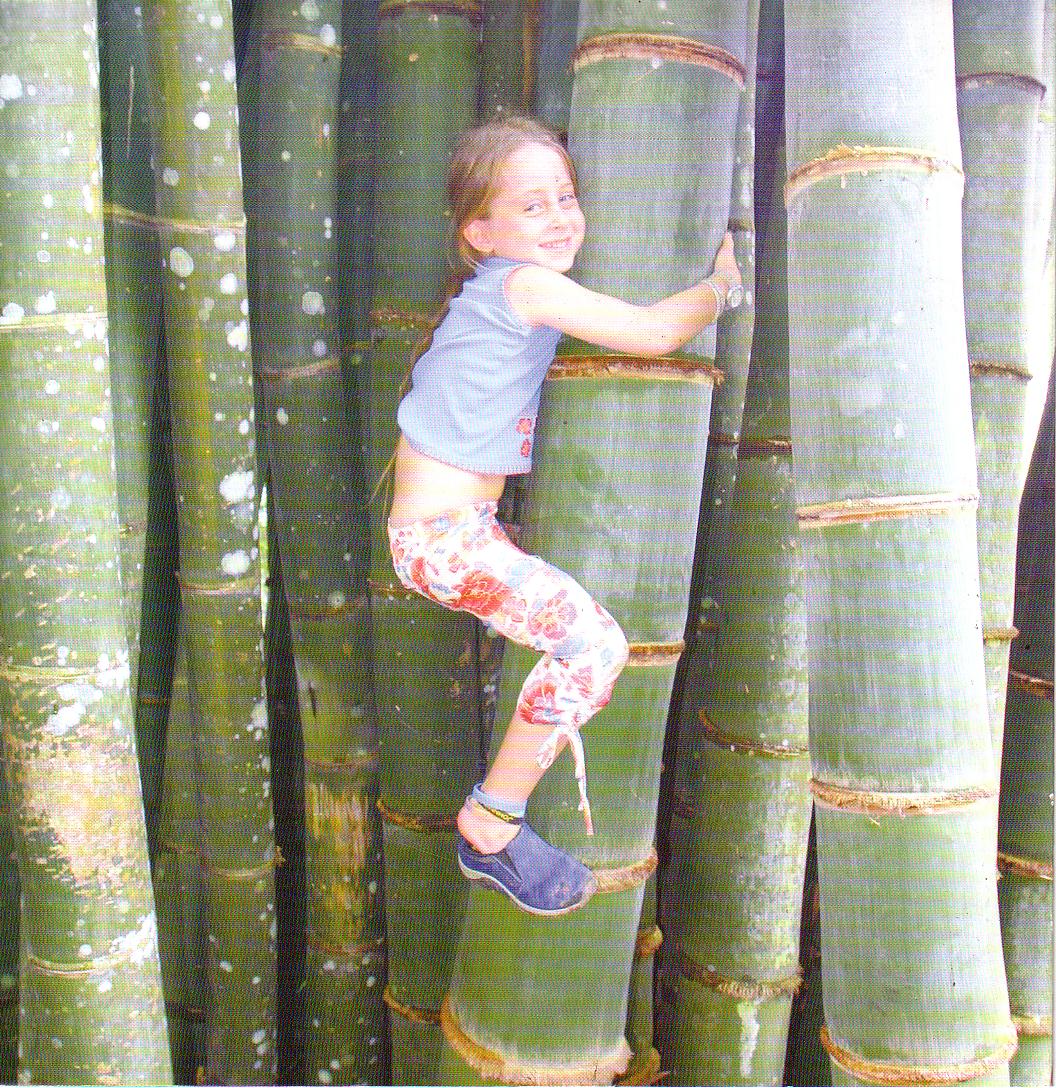
I like bamboo for what it is.Too many conjectures and hypothesis about bamboo
are rubbish.
________________________________
From: Raimund Düking <raimund.dueking@gmx.net>
To: bamboo-plantations@yahoogroups.com
Sent: Tue, 14 September, 2010 2:47:44
Subject: AW: [bamboo-plantations] bamboo inclusion in carbon forestry
Hello Nick and all,
I would like to repeat here some comments about the carbon sequestration of
bamboo stands.
Citation:
"There is significant potential to sequester and store carbon in well
managed bamboo stands. Although it is widely thought that bamboo has
higher than average carbon sequestration abilities, due to their fast
growth rate, … "
1. A full-grown bamboo stand does not sequester carbon because he is at
equilibrium of growth and decomposition. A full-grown bamboo stand is a
carbon stock which is flown through by the carbon. To understand better the
difference between "carbon stock" and "carbon flux" please see the following
published data:
Page 49, figure 6 in Y. ISAGI, T. KAWAHARA, K. KAMO & H. ITO:
Net production and carbon cycling in a bamboo Phyllostachys pubescens stand.
Plant Ecology 130: 41 – 52, 1997
If you can understand German, you can find my critical comment about ISAGI's
publication here:
http://www.bambus-deutschland.de/wcms/Clients/113200756071213/Documents/40/0
90812%20Kohlenstoffkreislauf%20im%20Bambushain%20neu.pdf
2. The supposed higher carbon sequestration abilities of bamboo are based on
a misunderstanding since the fast growth rate of the new culms is not based
on the ongoing photosynthesis but on the shifting of organic material which
was stored before in the older culms and in the rhizomes. In other words:
The older culms, which unlike the trees don't become anymore higher and
thicker, focus their whole annual yield on the emerging new culms. From
there results the astonishing growth of the new culms.
Please see the following publication:
E. MAGEL, S. KRUSE, G. LÜTJE, & W. LIESE:
Soluble carbohydrates and acid invertases involved in the rapid growth of
developing culms in Sasa palmata (Bean) Camus. The
Journal of the American Bamboo Society 19(1): 23 – 29, 2006
3. If you are thinking of storing carbon in bamboo products, please pay
attention to the critical Bangkok paper of Walter Liese:
Liese, W, (2009), Bamboo as Carbon-Sink - Fact or Fiction? VIII World Bamboo
Congress, CD, Vol. 3, 71-79
Kind regards,
Raimund
_____
Von: bamboo-plantations@yahoogroups.com
[mailto:bamboo-plantations@yahoogroups.com] Im Auftrag von
bamboo-plantations-owner@yahoogroups.com
Gesendet: Dienstag, 7. September 2010 08:09
An: bamboo-plantations@yahoogroups.com
Betreff: [bamboo-plantations] bamboo inclusion in carbon forestry
Hello,
The message below was sent to me by Nick Hogarth of CGIAR. I have
pasted the contents of the attachment to the text body at the end of the
message.Your comments are welcome.
Kind regards,
Victor BriasModerator
Begin forwarded message:
From: "Hogarth, Nick \(CIFOR\)" <N.HOGARTH@CGIAR.ORG
<mailto:N.HOGARTH%40CGIAR.ORG> >
Date: 7 Sep 2010 06:42:27 GMT+02:00
To: <info@bamboo-plantations.com <mailto:info%40bamboo-plantations.com> >
Subject: bamboo inclusion in carbon forestry
Hi Victor, I thought the bamboo plantations community may wish to
comment on the email (below) and attachment regarding bamboos inclusion
in ecosystems services certification and carbon sequestration. cheers,
Nick Hogarth
Poverty Environment Network (CIFOR)
Center for International Forestry Research
Bogor, Indonesia
E-mail: n.hogarth@cgiar.org <mailto:n.hogarth%40cgiar.org>
mob: +62 81280702018
web: http://www.cifor.cgiar.org/pen/_ref/about/index.htm
<http://www.cifor.cgiar.org/pen/_ref/about/index.htm>
The Plan Vivo Foundation is currently seeking views on whether the
Plan Vivo Standard should include bamboo in eligible activities for
generation of Plan Vivo Certificates (ecosystem certificates based on
the volunatary reduction or avoidance of carbon emissions) Please send
your comments by email to elaine@planvivofoundation.org
<mailto:elaine%40planvivofoundation.org>
<mailto:elaine@planvivofoundation.org
<mailto:elaine%40planvivofoundation.org> > Elaine Muir
Programmes Manager
Plan Vivo Foundation
Tower Mains Studios
18b Liberton Brae
Edinburgh
Scotland EH16 6AE
Tel: +44 (0)131 672 3782
www.planvivo.org <outbind://45/www.planvivo.org>
The Plan Vivo Foundation is a charity registered in Scotland, Charity
Number SC040151.
================================================================
Should ecosystem services from bamboo
be eligible for generating Plan Vivo Certificates?
Plan Vivo Consultation Note
August 2010
The Plan Vivo Foundation is seeking views on whether the Plan Vivo
Standard should include bamboo in eligible activities for generation of
Plan Vivo Certificates (ecosystem service certificates based on the
voluntary reduction or avoidance of carbon emissions). Inclusion of
bamboo is being considered due to its potential to generate both climate
benefits, but also compelling livelihood and ecosystem benefits.
Specific consultation questions can be found at the end of the document.
Please send your comments by email to elaine@planvivofoundation.org
<mailto:elaine%40planvivofoundation.org>
<mailto:elaine@planvivofoundation.org
<mailto:elaine%40planvivofoundation.org> > before Wednesday September 15th.
The Foundation appreciates all comments, ideas and feedback.
Current position of carbon standards on crediting bamboo activities
· Compliance regimes (CDM, JI)
Bamboo is taxonomically classified as a grass, not a tree. Therefore
there have been reservations in permitting its use in CDM afforestation
and reforestation projects[1] <#_ftn1> . The CDM Executive Board
position on the matter is that, until a country's Designated
National Authority expressly includes bamboo in their definition of
`forest', it is assumed that the definition does not include it.
There are currently no CDM bamboo projects.
· Voluntary regimes
Currently no voluntary standards include bamboo as a creditable
activity. NB/ This does not mean that projects cannot include bamboo
activities as a means of generating emissions reductions from other
areas; e.g. a Plan Vivo REDD+ project could support bamboo planting to
reduce local deforestation drivers. However, the carbon benefits of
planting or managing bamboo cannot directly result in carbon credits.
Concerns about crediting bamboo include both the difficulty of including
it in the definition of forestry (to enable crediting under the category
of `afforestation and reforestation'), and also concerns that
use of carbon finance for bamboo could result in large plantations with
no or little biodiversity benefits.
The case for crediting carbon benefits from bamboo in Plan Vivo projects
· Potential climate impacts
There is significant potential to sequester and store carbon in well
managed bamboo stands. Although it is widely thought that bamboo has
higher than average carbon sequestration abilities, due to their fast
growth rate, there is a lack of published data available to support
this. However, it is generally accepted that the productivity of bamboo
biomass, particularly in managed stands, is within the range of woody
biomass in the same environment.
· Potential livelihood impacts
Growing bamboo can provide significant livelihood benefits for land
managers, particularly poor, small-scale, rural land managers. It can
provide:
- Long-life products e.g. furniture and construction materials
- Renewable biomass fuel (bamboo can reduce deforestation by
providing a substitute for fuel wood from natural forest)
- Increased food security in human and livestock diets; shoots of
many species are edible and nutritious, and also a source of fodder for
livestock.
The fast growth and early maturation of bamboo stand, and potential for
selective harvesting – extracting older culms and leaving younger
ones to grow – means income can be derived from bamboo without
decreasing total stand biomass. Annual harvesting of bamboo can provide
an important source of regular income, with the opportunity for quick
returns on any up-front costs and labour.
Case study: Bamboo for development in Peru
A three-year bamboo development project in the north of Peru, has
established three micro-enterprises, employed 100 artisans and trained
300 farmers in bamboo silviculture – all of whom are now earning
incomes from bamboo. Many of the beneficiaries are women, in an area
where development projects normally benefit men.
· Potential ecosystem impacts
Bamboo plays a significant role in biodiversity conservation. For
example, many birds use bamboo as a significant proportion of their
habitat and there are many little-known invertebrates specially adapted
to the environment within hollow bamboo culms.
Bamboo also provides many ecosystem services (shown in table 1) making
it an important plant for agroforestry in particular.
Table 1: Ecosystem services provided by bamboo (as classified by the
Millennium Ecosystem Assessment)
Category of Services
Type of services provided by bamboo
Support services
Nutrient cycling, primary production
Provisioning services
Food, fuel wood, fibre, biochemical, genetic resources
Regulating services
Climate, water regulation and water purification
Cultural services
Spiritual and religious, recreation, aesthetic, inspirational,
educational, sense of place, cultural heritage
Plan Vivo and bamboo
Several features of Plan Vivo projects mean that bamboo activities may
be particularly appropriate for crediting, and thus should be considered
for crediting:
· Bamboo activities appear to have significant potential to
provide ecosystem services at the same time as livelihood benefits, with
economic returns in relatively short-time spans
· Plan Vivo activities are always programmatic in nature; they
take place on multiple smallholder or communally owned or managed land
and therefore result in multiple interventions across a landscape,
typically including several activities and different species. Inclusion
of bamboo therefore will not lead to large scale commercial plantations,
and the diversity of activities means that projects will still have
diverse biodiversity benefits.
Consultation questions:
1. Is there a valid case for the quantification and
certification of the ecosystem services provided by bamboo, in the
form of Plan Vivo Certificates?
2. Should bamboo only be eligible for crediting as an A/R
activity (i.e. crediting of carbon sequestration, not emissions
reductions from existing bamboo stands)?
3. Should bamboo activities only be eligible for crediting if
they form part of a wider set of project activities, including
afforestation or avoided deforestation, or should stand alone bamboo
projects be eligible for validation?
4. What potential risks are there to inclusion of bamboo that
would need to be considered?
[1] <#_ftnref> Kant, P (2010) Should Bamboos and palms be included in
CDM forestry projects? IGREC Web Publication No. 07/2010.
http://igrec.in/bamboos_and_palms_under_cdm_forestry.html
<http://igrec.in/bamboos_and_palms_under_cdm_forestry.html>
[Non-text portions of this message have been removed]
[Non-text portions of this message have been removed]
[Non-text portions of this message have been removed]
------------------------------------
************************************************************************
WBO REMINDER : The 18th of September is WORLD BAMBOO DAY !
************************************************************************
++++++++++++++++++++++
BAMBOO-PLANTATIONS is now on FaceBook too.
Use the Bamboo-Plantations Group in FaceBook to upload your fotos and Videos about bamboo.
++++++++++++++++++++++
http://www.bamboo-plantations.com
To unsubscribe from this group, send an email to:
bamboo-plantations-unsubscribe@yahoogroups.com
Yahoo! Groups Links
<*> To visit your group on the web, go to:
http://groups.yahoo.com/group/bamboo-plantations/
<*> Your email settings:
Individual Email | Traditional
<*> To change settings online go to:
http://groups.yahoo.com/group/bamboo-plantations/join
(Yahoo! ID required)
<*> To change settings via email:
bamboo-plantations-digest@yahoogroups.com
bamboo-plantations-fullfeatured@yahoogroups.com
<*> To unsubscribe from this group, send an email to:
bamboo-plantations-unsubscribe@yahoogroups.com
<*> Your use of Yahoo! Groups is subject to:
http://docs.yahoo.com/info/terms/

